
South Australia is one of Australia's most rewarding destinations: world-class wine regions, dramatic coastlines, abundant wildlife, and a relaxed capital city that feels like a large country town. For Chinese visitors, a little preparation goes a long way. This guide covers everything you need to know before you go.
When to Visit South Australia
South Australia enjoys a Mediterranean climate with four distinct seasons, and each one offers something different. Summer (December to February) brings long, sunny days with temperatures often reaching 35 degrees Celsius. It is ideal for beach trips, coastal drives, and outdoor festivals. Just remember to pack sunscreen and a hat; the Australian sun is famously strong.
Autumn (March to May) is many locals' favourite season. The heat softens, the vineyards turn gold and crimson, and harvest activity fills the wine regions with energy. It is the best time for a Barossa Valley or McLaren Vale day trip. Spring (September to November) brings wildflowers, green hills, and comfortable temperatures for hiking and wildlife spotting on Kangaroo Island. Winter (June to August) is mild by northern-hemisphere standards. Adelaide rarely dips below eight degrees Celsius, and the season offers quiet cellar doors, cosy restaurant dining, and the chance to see migrating southern right whales along the Fleurieu Peninsula coastline.
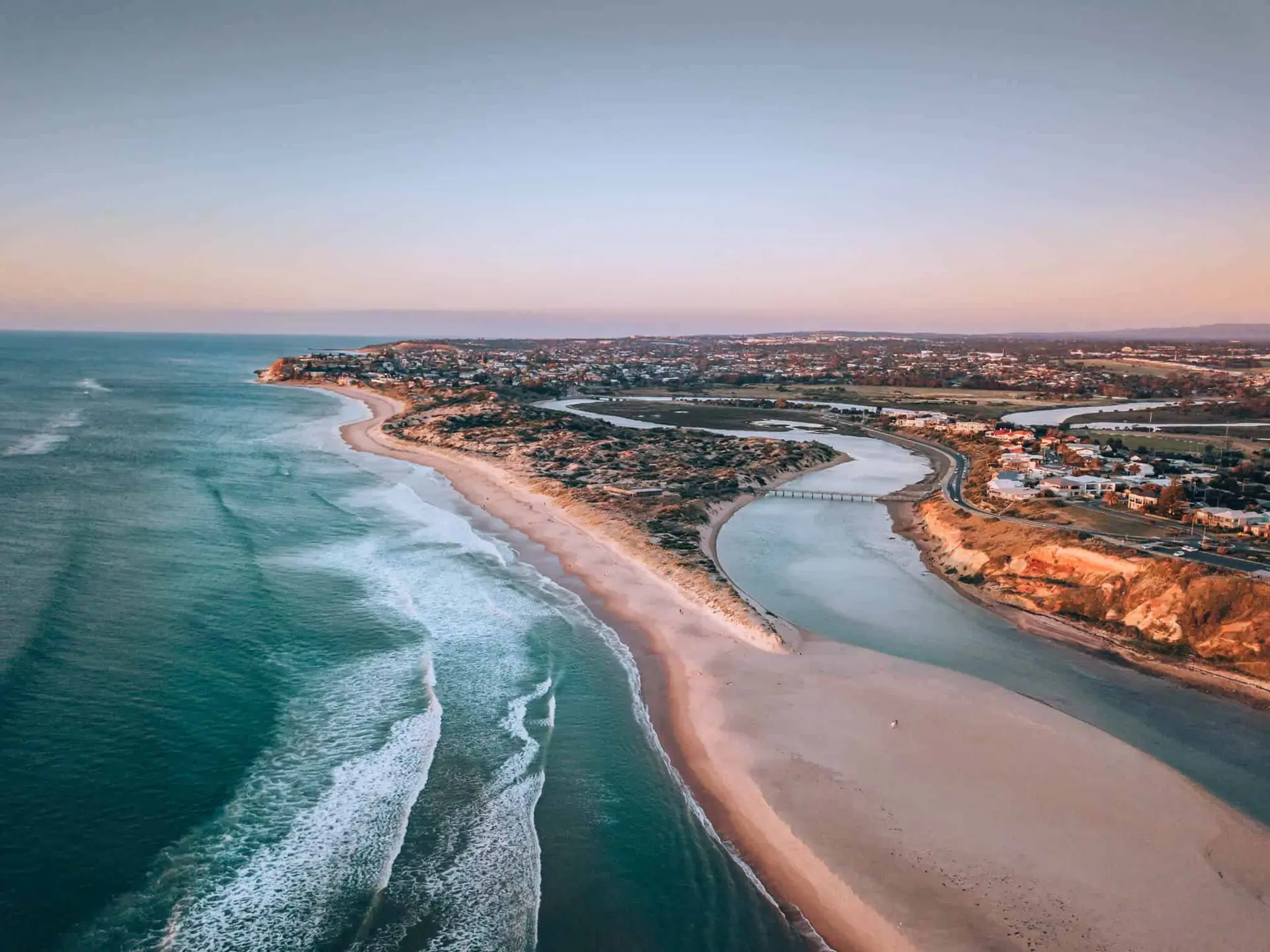
Getting to South Australia
Adelaide Airport (ADL) is the main gateway to South Australia. It is compact, efficient, and located only seven kilometres from the city centre. Direct international flights connect Adelaide with key Asian hubs including Singapore, Kuala Lumpur, and Hong Kong, while domestic connections from Sydney, Melbourne, and Brisbane arrive hourly. The airport offers free Wi-Fi, currency exchange, and a surprisingly good selection of South Australian wine at the duty-free shops.
Chinese passport holders need a valid Australian visa before travelling. The most common option for tourism is the Visitor visa (subclass 600), which can be applied for online through the Australian Department of Home Affairs website. Processing times vary, so apply at least four to six weeks before your planned departure. Check the latest requirements on the official immigration website, and remember that your passport must be valid for at least six months beyond your intended stay. For more detailed pre-travel advice, see our frequently asked questions page.
Getting Around
South Australia is large: it covers nearly one million square kilometres, roughly the size of four United Kingdoms. How you get around depends heavily on your itinerary. Within Adelaide, the free City Connector bus loops past major attractions, and the tram line connects the city centre with Glenelg Beach in about thirty minutes. Taxis and rideshare services such as Uber and DiDi operate widely.
If you plan to explore beyond Adelaide, renting a car is popular. Australian roads are generally well-maintained, and traffic is light compared to Chinese cities. However, driving is on the left side of the road, and distances between towns can be significant. A Chinese driving licence must be accompanied by an official English translation or an International Driving Permit. Many rural areas have limited or no mobile phone reception, so download offline maps before leaving the city.
For a stress-free experience, a private charter tour eliminates the need to navigate unfamiliar roads, interpret road signs, or manage long drives between destinations. It is the most comfortable way to see South Australia's highlights, especially for families, groups, or anyone who prefers to focus on the scenery rather than the steering wheel. Browse our full collection of South Australian private tours to find an itinerary that suits your pace.

Language & Communication
English is the official language of Australia, and most South Australians speak clearly and are patient with visitors. That said, Australian English has its own distinctive slang. Words like "arvo" (afternoon), "brekkie" (breakfast), and "no worries" (you're welcome / it's fine) are common in casual conversation. You will also hear "G'day" as a greeting. These expressions are friendly and informal; do not feel pressured to use them, but recognising them makes everyday interactions smoother.
In Adelaide's Chinatown precinct and many restaurants, Mandarin and Cantonese are widely spoken. Tourist information centres, major hotels, and larger attractions often have multilingual staff or printed guides. That said, venturing into regional areas or smaller towns may require basic English or a translation app on your phone. Booking a bilingual private guide through Chenghua.K Travel removes language barriers entirely, allowing you to ask questions, understand stories, and connect with local culture more deeply.
Money & Payments
Australia's currency is the Australian dollar (AUD). Notes come in denominations of 5, 10, 20, 50, and 100 dollars, and coins range from 5 cents to 2 dollars. Australia is one of the world's most cashless societies: credit and debit cards are accepted almost everywhere, including market stalls, food trucks, and small cafes. Visa and Mastercard are the most widely accepted; UnionPay cards work at major retailers and many ATMs, though acceptance is less universal in rural areas.
Mobile payment platforms such as Apple Pay, Google Pay, and Samsung Pay are widely supported. Alipay and WeChat Pay are available at a growing number of tourist-facing businesses in Adelaide, especially those in Rundle Mall, Chinatown, and major shopping centres, but are not yet ubiquitous. Carrying a small amount of cash, perhaps fifty to one hundred dollars, is sensible for regional bakeries, small-town markets, or emergencies.
Australian Etiquette & Culture
Australian culture is egalitarian and direct. People tend to treat everyone, from a CEO to a barista, with the same level of respect and informality. Queuing patiently is expected in all settings: at the supermarket, at a bus stop, and when boarding a plane. Pushing in, or queue-jumping, is one of the few things that genuinely offends Australians.
Australians value personal space and tend to stand about an arm's length apart during conversation. Loud phone calls in enclosed public spaces such as trains, restaurants, or galleries draw attention. Smoking is heavily regulated; it is banned inside all public buildings, on public transport, and in outdoor dining areas. Look for designated smoking zones. Tipping is not expected but is appreciated for exceptional service (see the tipping section below).
South Australians are proud of their multicultural community and generally warm toward international visitors. A simple "please" and "thank you" goes a long way, and asking locals for recommendations is a great way to discover hidden gems. If you have questions about local customs or what to expect before you arrive, our team is always happy to help through our contact page.
Food & Dietary Tips
South Australia's food scene is exceptional. Adelaide is ringed by fertile farmland and world-famous wine regions, which means fresh produce, artisan cheese, free-range meat, and excellent seafood are the norm rather than the exception. The Adelaide Central Market, operating since 1869, is one of the largest fresh-produce markets in the Southern Hemisphere and a must-visit for food lovers.
For Chinese visitors, Adelaide offers a strong selection of Asian dining: Gouger Street and Chinatown are packed with Cantonese, Sichuan, northern Chinese, and Vietnamese restaurants. Most Australian cafes and restaurants are accommodating of dietary requirements. Vegetarian, vegan, halal, and gluten-free options are common, especially in the city. If you have specific dietary needs, it helps to inform the restaurant when booking.
Tap water in South Australia is safe to drink and is served free of charge at restaurants if requested. By law, any venue that serves alcohol must also provide free drinking water. Bottled water is widely available but unnecessary in most situations. One local food rule to note: Australia has strict biosecurity laws, and fresh food, meat products, and certain plant materials cannot be brought into the country. Declare any food items on your incoming passenger card to avoid fines.
Tipping in Australia
Unlike in the United States, tipping in Australia is not compulsory. Hospitality workers earn a legal minimum wage, so service charges are built into menu prices. That said, tipping is becoming more common in fine-dining restaurants and for exceptional service. A tip of around 5 to 10 percent of the bill at a high-end restaurant is appreciated but never expected. For taxi rides or food delivery, rounding up to the nearest dollar is a polite gesture. Tour guides and private drivers appreciate tips when the service has been outstanding, but there is no set expectation; a genuine thank-you is just as welcome.
Safety Tips
South Australia is one of the safest places in the world to travel. Adelaide consistently ranks among the top cities globally for safety and liveability. Violent crime is rare, and visitors can comfortably explore the city centre, beaches, and regional towns without concern.
The most important safety considerations are environmental rather than criminal. The Australian sun is intense, and sunburn can occur in as little as fifteen minutes during summer. Wear SPF 50 sunscreen, a broad-brimmed hat, and sunglasses whenever you are outdoors for extended periods. Stay hydrated: carry a reusable water bottle and refill it throughout the day. If you are driving in rural or outback areas, always let someone know your route and expected arrival time, carry extra water, and never leave your vehicle if you break down in a remote location.
At the beach, swim only between the red and yellow flags, which mark patrolled areas monitored by Surf Life Saving South Australia. Rips and strong currents can appear without warning, even at calm-looking beaches. Obey all warning signs and listen to lifeguard instructions. In the bush, watch for snakes during warmer months; they generally avoid people, so stay on marked paths and wear closed shoes on walking trails. Emergency services can be reached by dialling 000 (triple zero) anywhere in Australia, 24 hours a day.
Why Choose a Private Tour
Travelling in a foreign country comes with unknowns: navigation, language, local customs, and the simple risk of missing the best experiences because you did not know they existed. A private tour solves all of these problems at once. Your itinerary is custom-built around what matters to you, whether that is wine tasting in the Barossa, wildlife photography on Kangaroo Island, or a relaxed coastal drive with stops for fresh seafood and ocean views.
Chenghua.K Travel specialises in private, bilingual tours for Chinese visitors. Our guides are locals who know the roads, the best photo stops, and the stories behind every landmark. We handle pick-up from your hotel or the airport, arrange bookings at cellar doors and restaurants, and provide door-to-door service in our luxury fleet. There is no rigid schedule, no large group to keep pace with, and no stress about getting lost. Browse our range of private tours or check our FAQ page for answers to common questions.
Ready to plan your South Australia trip?
Contact Chenghua.K Travel today. Our bilingual team will help you design a private itinerary that matches your interests, pace, and travel dates. From airport pick-up to regional day trips, we take care of every detail.
Get in Touch arrow_forward